The History of AtlantoMed
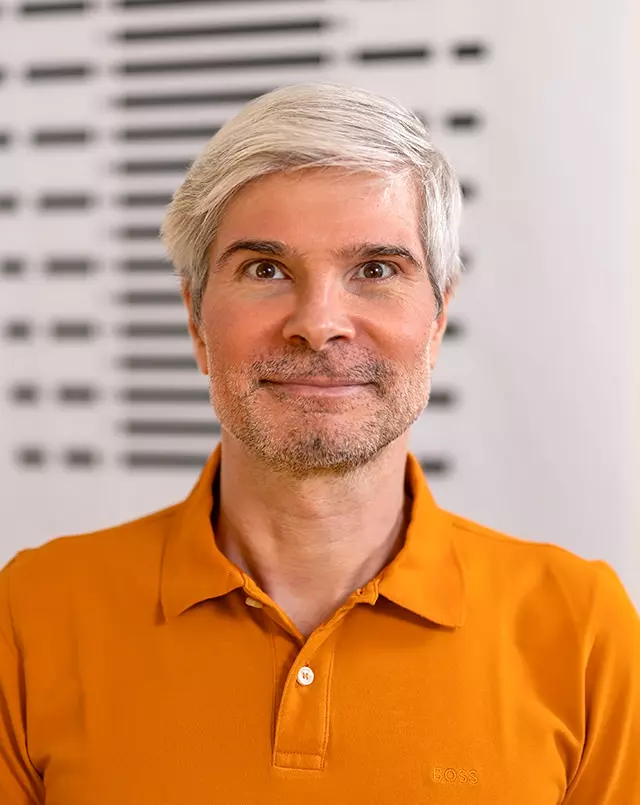
For many years, manual therapists have recognized the involvement of a misaligned first cervical vertebra in a range of disorders. Atlas correction is not a new discovery, especially in Switzerland, the birthplace of this technique.
Conventional practices, including chiropractic and osteopathic manipulations, often produce only temporary results, forcing people into continuous treatments without definitively solving the issue. AtlantoMed was born out of awareness of the importance of the first cervical vertebra and a desire to offer a more durable and effective solution.
In 2004, Alfredo Lerro, a free thinker and founder of AtlantoMed, initiated an in-depth analysis of the various Atlas correction methodologies available at that time. He observed that each approach had positive aspects but also significant limitations. This realization drove Lerro, with his perfectionist personality, to seek more advanced solutions.
Alfredo Lerro's philosophy is clear and determined: never settle for mediocre results when much more can be achieved. This evolution is rooted in learning from past mistakes and continuous improvement.
Thanks to AtlantoMed, it became possible to highlight the importance and exact dynamics of the processes involving the first cervical vertebra. This shed light on how many previously accepted cause-and-effect theories were based on completely flawed assumptions and observations, while others were grounded in partial understanding of the dynamics involved. This led to therapeutic approaches inadequate for resolving the problem sustainably.
AtlantoMed evolved to overcome the shortcomings of previous approaches. Independent radiological studies conducted by Alfredo Lerro deepened the understanding of the biomechanics of cervical vertebrae. This new knowledge shaped the AtlantoMed method of correction using vibro-resonance as we know it today.
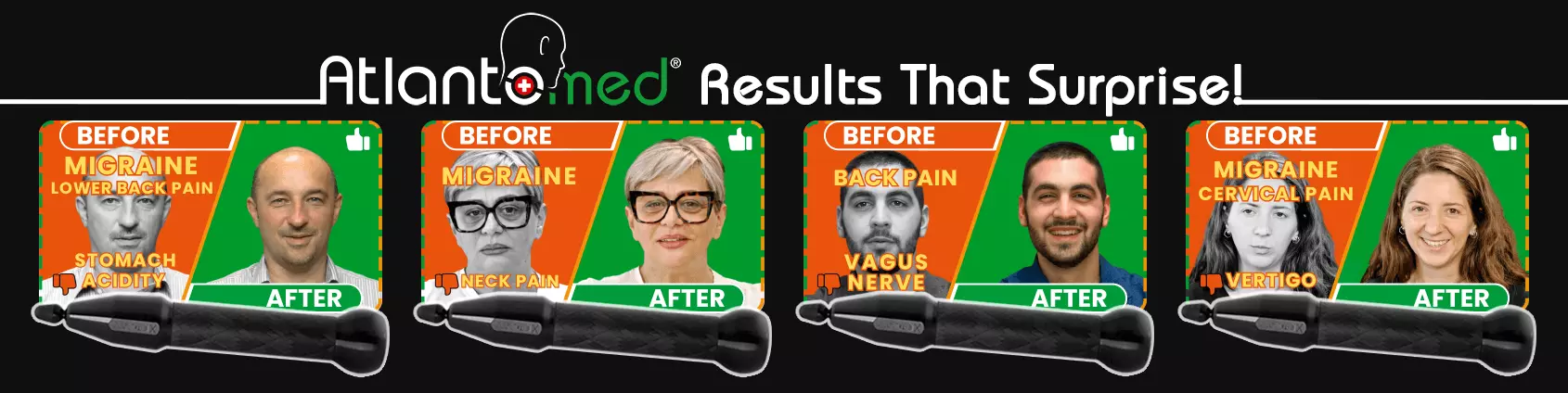
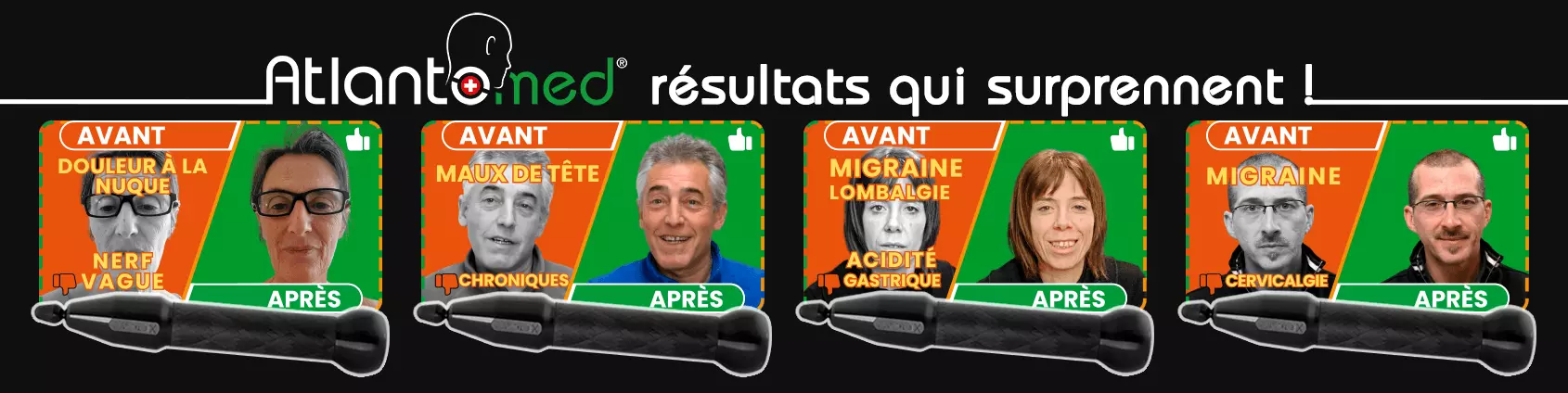
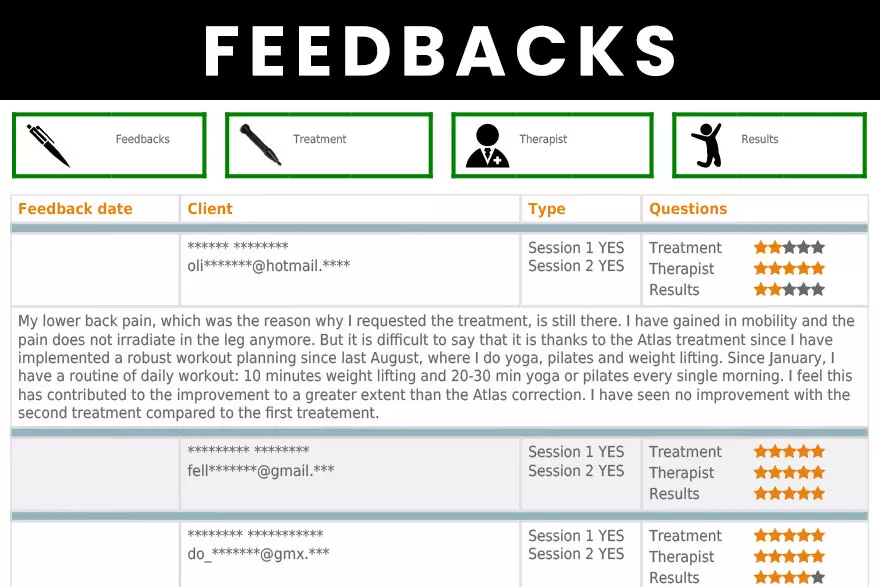
11,000 testimonials supporting AtlantoMed, compared to a handful for other methods, underscore its effectiveness, highlighting the significant improvement potential available over previous methods.
Conventional medicine shows a complete lack of interest in the connection between Atlas misalignment and numerous disorders. This short-sighted approach leads to misdiagnoses for conditions that could, in reality, stem from a mispositioned Atlas and find a simple solution.
Other practices focused on the Atlas hypothesize misalignments of a few tenths of a millimeter, while others, like AtlasPROfilax, imagine a complete dislocation of the Atlas with a 45° rotation. However, these claims are based solely on drawings as evidence, ignoring the fact that such dislocations would be incompatible with life.
As often happens, the truth lies somewhere in the middle, and neither approach fully captures nor properly sizes the issue. Alfredo Lerro's research has shown that Atlas misalignment can reach up to 8 degrees in rotation, with or without lateral slippage, and may also involve misalignment of the second cervical vertebra, called the Axis.
The application of theories based on flawed assumptions inevitably leads to equally inadequate treatments, as the inability to fully understand the problem conditions prevents finding suitable solutions to resolve it.
For example, chiropractic attempts to correct cervical spine misalignments with sharp, abrupt neck thrusts, while gentler and more progressive treatments would be more appropriate. In overseas countries and Northern Europe, there is a gradual shift toward softer manipulations known as "low force," in response to compensation claims and lawsuits arising from failed cervical manipulations that caused permanent damage and even fatalities. These incidents have cast a shadow over chiropractic care, fueling skepticism and fear toward any cervical treatment. Who hasn't heard of people harmed or even killed following chiropractic manipulation? Such episodes have contributed to a controversial reputation, raising questions about the safety of traditional techniques.
Believing that the Atlas can be corrected with a single thrust is like thinking you can drive a nail into concrete with one hammer blow.
Other methods attempt to correct misalignments not only manually but also with the use of various tools, as in the case of Atlas Orthogonal. Atlaslogy, on the other hand, relies on mental energy and assumes that Atlas misalignment is limited to a few tenths of a millimeter, correctable through thought power and the application of only 2 grams of fingertip pressure in a swaying motion.
AtlasPROfilax by René Schümperli
The one who came closest empirically to a lasting solution for the Atlas problem was René Schümperli (deceased in 2013), founder of AtlasPROfilax, to whom Alfredo Lerro owes credit for steering him toward this practice. Although AtlasPROfilax provides better results than other techniques, it is based on erroneous assumptions and dangerous oversimplifications. These include the idea that all Atlases are uniformly dislocated, that dislocation is always on the same side, and that the treatment has no contraindications. Such simplification bypasses the preliminary verification of the vertebra's position, compensating for a lack of training. In fact, almost all AtlasPROfilax practitioners lack any healthcare training. If they were truly able to verify vertebra positioning, they certainly wouldn't claim to correct all Atlases in the same way. Nevertheless, it must be acknowledged that AtlantoMed would not exist without the initial contribution of AtlasPROfilax. Despite its mistakes and limitations, AtlasPROfilax was an essential starting point for developing a more advanced method.
When Schümperli was confronted by Lerro with a series of CT images produced by an experienced Zurich radiologist and neurologist with thirty years of experience, which unequivocally showed maximum Atlas displacements of up to 8 degrees and certainly not the 45° hypothesized by Schümperli, including vertebral rotations both to the right and left, thus disproving his theories, Schümperli's initial reaction (a detail known only to a few) was to threaten the Zurich radiologist, demanding secrecy and non-disclosure of the images.
In 2010, in an attempt to validate his questionable theory, Schümperli commissioned a study from Dr. med Rainer M. M. Siebel, who was later sentenced to three years in prison for fraud and corruption. Despite his claims, not a single axial-plane radiological image was ever presented to validate the alleged 45° misalignments.
The erroneous assumptions of Schümperli and AtlasPROfilax inevitably led to inappropriate corrections in all cases where the presumed "dislocation" did not match the hypothesis. Moreover, this method employed a treatment tool that was too light and proved ineffective and particularly noisy when applied to people with very tense musculature.
After criticizing us for years, claiming that the AtlantoVib device we developed and patented was too powerful and potentially harmful, the leaders of AtlasPROfilax thought it wise to copy our first AtlantoVib model, thereby infringing our patent. Meanwhile, our device has evolved to its fifth generation, while theirs has remained unchanged, lacking resonance and modulation.
After Schümperli's death, the AtlasPROfilax group renounced the founder's theory, which they had staunchly defended for over a decade, ultimately adopting the AtlantoMed thesis, leaving behind the improbable theory that "all Atlases are dislocated on the same side."
AtlasPROfilax lacks adequate muscle preparation, making the brief treatment easily ineffective in cases of overly tense musculature.
Over time, AtlasPROfilax therapists have largely dispersed, adopting diverse approaches at their discretion. In stark contrast, AtlantoMed (previously Atlantotec) has consolidated its presence, gaining growing consensus and appreciation.
AtlantoMed has significantly raised the standards of achievable results with true Atlas correction, offering a much longer (75 minutes) and structured treatment. This has proven to be a winning strategy, demonstrating how consistency and quality are rewarded over time, unlike improvised solutions destined to disappear as quickly as they emerged.
How was the AtlantoVib vibro-resonance device created?
Before proceeding with the actual correction, we pay great attention to accurate muscle preparation of the entire spine. To achieve this goal, we use an alternative that is more effective and faster than traditional manual massage, capable of "resetting" the entire spine.
In manual treatment disciplines, identifying the origin of muscular dysfunction is challenging. It is essential to recognize the primary origin of the dysfunction among the different muscle chains, distinguishing it from secondary effects and compensations at the root of postural imbalance.
Following the principle that simple solutions often prove to be the best, Lerro, in his quest for a more effective alternative, developed a powerful tool capable of completely relaxing the various muscle layers and removing blockages regardless of their location. This device leverages mechanical muscle vibro-resonance, an innovative principle that cannot be replicated with manual massage.
After years of field testing and experimentation aimed at identifying the ideal frequency range, optimal modulation, and perfect oscillation amplitude to maximize effectiveness in the shortest possible time, the first AtlantoVib model was born—a device as effective as it was revolutionary. Evolving to its fifth generation, the device leverages a previously unexplored principle in the context of massage: muscle vibro-resonance. This innovation allows for deep and rapid relaxation, involving even the internal skeletal muscles that are difficult to reach manually. In practice, the entire skeleton vibrates cyclically in response to vibro-resonance and modulation.
Vibro-resonance with modulation is a highly specific phenomenon, which should not be confused with simple fixed-frequency vibration, as used by other vibrating devices for Atlas correction or common massagers now widespread for personal use. The latter, often also present in physiotherapy studios, lack the modulation capability necessary to achieve the profound and targeted effects of muscle resonance, making the operating principle of AtlantoVib unique.
The AtlantoMed method eliminates the need for cervical chiropractic manipulations, proving to be a more precise and effective solution for safely addressing the misalignment of the first cervical vertebrae. This represents a significant advancement, especially considering that cervical spine chiropractic manipulation can, in some cases, be the very cause of subsequent issues.
Yes, this confirmation comes directly from industry professionals who, after years of cervical manipulation practice, have happily decided to adopt the AtlantoMed method. The transition highlights the effectiveness and safety of the method, demonstrating its value compared to previous practices.
AtlantoVib X and BalaVib: Redefining Atlas Treatment
In 2025, after two long years of design and development by Alfredo Lerro, two innovative devices were created, destined to transform the landscape of Atlas correction.
AtlantoVib X
AtlantoVib X represents the technological evolution of the already highly effective AtlantoVib 4, bringing it to a completely new level. The difference from the previous model is so pronounced that it justifies the direct leap from the fourth to the tenth model, to adequately reflect the progress achieved. Each component was meticulously redesigned from scratch during two years of development, with each element revisited dozens of times to come closer to perfection. Made with top-quality materials used in the aerospace industry, AtlantoVib X redefines standards in Atlas treatment. Therapists using AtlantoVib X experience unprecedented comfort, precision, and sensitivity during the correction. The user experience is so advanced that once tried, no one wants to return to previous tools, highlighting the vast gap in performance and practicality.
BalaVib
BalaVib introduces a groundbreaking innovation in the field. Before its creation, nothing comparable existed: for the first time, a device can self-balance on the spine, autonomously performing the preparatory massage. This innovative tool was designed to address the increasing difficulty of treating increasingly tense musculature without extending treatment times.
Thanks to BalaVib, the therapist can focus all their attention on the cervical area, while BalaVib simultaneously handles the relaxation of the rest of the spine. Operations that were previously performed sequentially now occur in parallel, tripling the overall efficiency of the treatment. This solution significantly improves results, offering a more comfortable, technologically advanced, and effective experience.
A New Era in Atlas Treatment
The introduction of BalaVib and AtlantoVib X marks the beginning of a new era in Atlas treatment. These devices ensure perfect synergy between innovative technology and therapeutic attention. They are concrete evidence of how continuous innovation can drastically improve treatment quality, meeting the needs of those seeking a cutting-edge approach and lasting results.

 Svenska
 230 post-Atlas-correction interviews in Italian
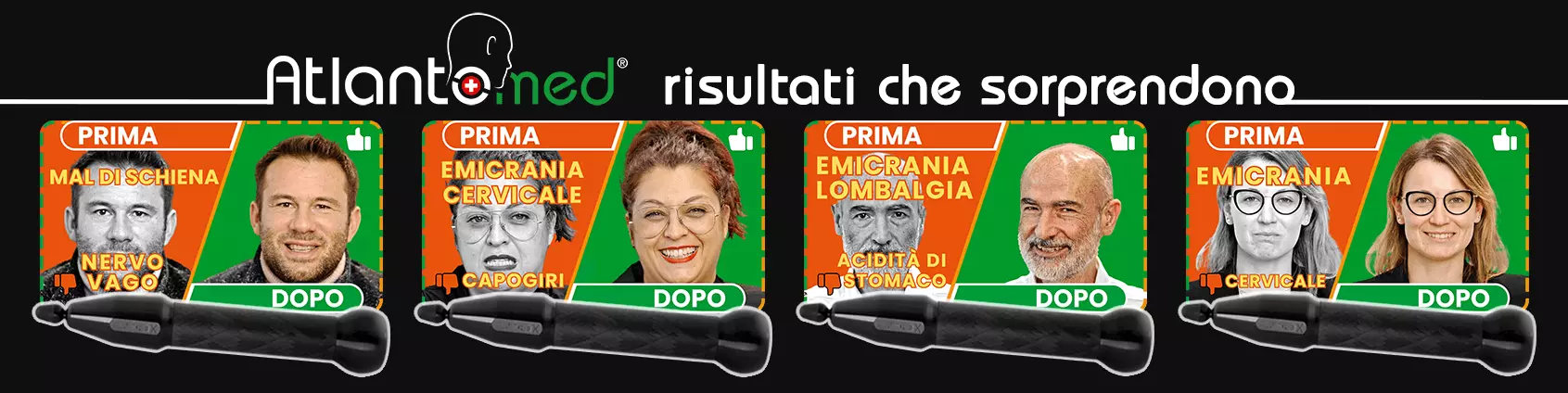
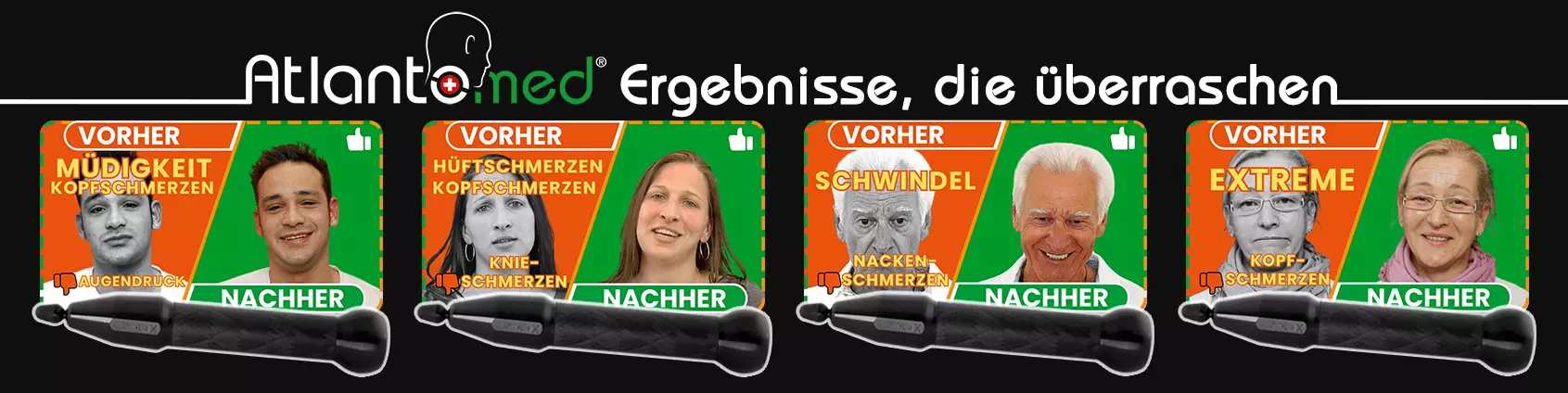
 43 post-Atlas-correction interviews in German
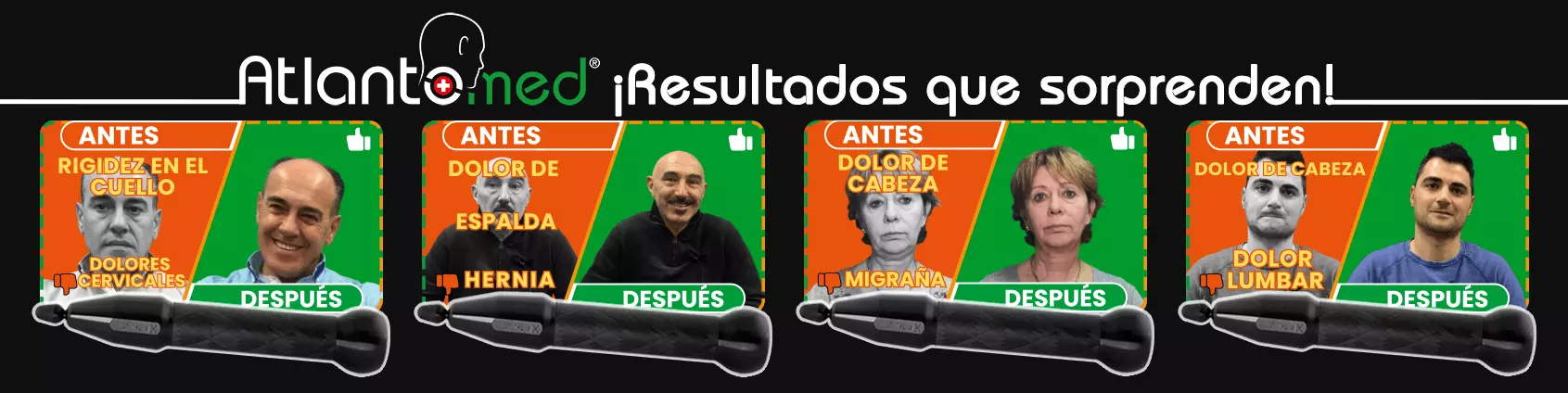
 24 post-Atlas-correction interviews in Spanish
 5 post-Atlas-correction interviews in English
 1 post-Atlas-correction interview in French








 Switzerland
 Austria
 Slovenia